
Seeing your dog favor a leg is alarming, especially when you can’t pinpoint why. Is it a strain that’ll sort itself out, or something that needs a vet visit today? This guide will help you pinpoint what you’re dealing with, and whether the absence of obvious pain is actually a reason to feel reassured.
Here’s what most owners don’t realize: a dog limping on a back leg without showing pain doesn’t automatically mean it’s minor. In some cases, it can point to something more serious happening beneath the surface, and catching it early genuinely changes outcomes.
Limping With No Obvious Pain: Why That Doesn’t Mean “No Big Deal”
It’s natural to assume that no yelping, no wincing, no obvious discomfort means the injury is mild. But pain isn’t the only signal a limp can send.
Some causes of back leg limping are neurological rather than orthopedic, meaning the issue isn’t with the muscle, joint, or bone itself, but with the nerve signals controlling that leg. Conditions like intervertebral disc disease (IVDD) can cause weakness, dragging, knuckling over on the paw, or an uncoordinated gait, often with little to no visible pain response, especially in the early stages.
That’s one of the trickiest parts of a neurological limp: the absence of pain can delay a trip to the vet while the underlying problem continues to progress.
Common Causes of a Limping Back Leg in Dogs
Back leg limping generally falls into two categories, and knowing which one you’re looking at matters.
Musculoskeletal causes (usually involve visible discomfort):
- Arthritis, especially in older dogs, which can cause stiffness and reluctance to move after rest
- Soft tissue injury or sprain from overexertion or a bad landing
- Luxating patella, a kneecap that slips out of place, common in smaller breeds; dogs often hop briefly, then resume walking normally as it pops back into position
Neurological causes (may involve little or no visible pain):
- Degenerative myelopathy, a progressive, non-painful spinal cord disease seen most often in older large-breed dogs, characterized by gradual hind limb weakness and loss of coordination
- IVDD, covered in more detail below
If your dog’s limp comes with dragging, knuckling, or general weakness rather than obvious wincing, a neurological cause is worth taking seriously.

IVDD: A Closer Look
Intervertebral disc disease happens when the cushioning discs between a dog’s vertebrae bulge or rupture, putting pressure on the spinal cord, a condition the American Veterinary Medical Association’s clinical journal identifies as one of the most common spinal disorders in dogs. Depending on where along the spine it happens and how severe the compression is, symptoms can range from mild wobbliness to full hind-leg paralysis.
Chondrodystrophic breeds, including dachshunds, corgis, and French bulldogs, are especially prone to IVDD, often showing signs between three and six years of age, according to Cornell University College of Veterinary Medicine. Larger breeds can develop a slower-progressing form later in life.
Early recognition genuinely changes outcomes here. Dogs treated before significant nerve damage sets in tend to have far better recovery odds than those diagnosed after the condition has progressed.
When to See a Vet Right Away
Some signs mean this isn’t a “wait and see” situation. Contact your vet immediately if you notice:
- Sudden onset or rapid worsening of weakness or limping
- Dragging a back paw or knuckling over while walking
- Loss of coordination in the back legs
- Loss of bladder or bowel control
- Any sign of loss of deep pain sensation (your dog doesn’t react to a firm pinch on the affected paw)
That last one is a true emergency. Research published via the National Institutes of Health shows loss of deep pain perception is one of the clearest negative prognostic indicators after spinal cord injury, and outcomes are significantly better when treatment begins promptly.
If you’re looking for more guidance on what to watch for and how to support your dog through recovery, the Assisi® pet parents resource page is a good place to start.

Supporting Recovery and Mobility with the Assisi Loop® Device
Once your vet has diagnosed the cause of your dog’s limping, recovery support becomes part of the plan, especially for dogs managing IVDD, arthritis, or post-injury mobility issues.
The Assisi Loop® targeted pulsed electromagnetic field (tPEMF™) therapy device is non-invasive and drug-free, and can be used alongside vet-directed care to support your dog’s recovery and comfort. It’s not a replacement for veterinary treatment, but many owners use it as part of a broader recovery plan their vet has laid out, whether that’s post-surgical recovery, managing chronic joint pain, or supporting a dog through IVDD rehabilitation.
For dogs recovering from IVDD specifically, the road can be gradual, with good days and setbacks along the way. Many owners find that consistent, at-home support makes a meaningful difference alongside their vet’s treatment plan, without the stress or cost of repeated clinic visits.
Goku was diagnosed with IVDD, a spinal condition that can turn simple movements like walking into a real challenge. His owner turned to Assisi Loop® therapy as part of his recovery plan.
“I first want to thank the Zomedica/Assisi team for helping Goku. The Assisi Loop device truly changed his life. I know IVDD can have its ups and downs, but Assisi Loop therapy became one of the biggest parts of his recovery. Today, Goku is back to walking, running, and enjoying life again.”
— Camilo Londono
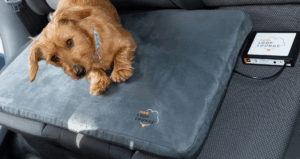
Because IVDD can affect any point along the spine rather than a single localized area, the Assisi Loop Lounge® bed may be a good alternative for dogs with spinal conditions. Its larger form factor is designed for whole-body treatment coverage, which makes it a particularly good fit for IVDD cases where the impact isn’t limited to one spot.
Talk to your vet about whether the Assisi Loop device makes sense as part of your dog’s specific treatment plan.
FAQ
Why is my dog limping on his back leg but not in pain?
Not all limping causes obvious pain responses. Neurological conditions like IVDD can cause weakness, dragging, or an abnormal gait without the yelping or wincing you’d expect from a sprain or orthopedic injury. If your dog is limping without apparent pain, it’s worth a vet visit rather than a wait-and-see approach, since neurological causes can progress quickly.
Why is my dog dragging their back leg with no pain?
Dragging a back leg without an obvious pain reaction is a common sign of nerve involvement rather than a muscle or joint issue. According to Cornell University College of Veterinary Medicine, IVDD is one of the most common causes and can present with minimal pain in early stages. This warrants prompt veterinary attention.

Why is my dog limping but not crying?
Dogs often mask pain instinctively, and neurological conditions don’t always register as pain the way orthopedic injuries do. A dog can have significant spinal cord involvement and show no distress signals beyond a change in gait or weakness.
When should I worry about my dog limping?
Worry immediately if the limping came on suddenly, is worsening, or is paired with dragging, loss of coordination, or loss of bladder or bowel control. These are potential signs of a neurological emergency. Limping that’s mild and stable after a known exertion is a lower-urgency concern, but any limp that doesn’t resolve within 24 to 48 hours deserves a call to your vet.
The Bottom Line
A limping back leg can mean a lot of different things, and the presence or absence of pain isn’t always the deciding factor in how serious it is. If you’re noticing weakness, dragging, or an unsteady gait in your dog’s back legs, talk to your vet. Visit the Assisi® pet parents resource page to learn more about whether the Assisi Loop device might be a useful part of your dog’s recovery plan.
© 2026 Zomedica Inc. All rights reserved. Assisi Loop and Assisi Loop Lounge are registered trademarks of Zomedica Inc.